

Introduction
My name is Walter Edward O’Neill, founder of Antiques Arena and antiquesarena.com. I have been involved in the world of antiques for nearly 30 years, working as a full-time professional dealer with a deep passion for historical objects, craftsmanship, and the stories they carry.
Alongside my work as a dealer, I run an educational YouTube channel, where I share my knowledge, experience, and enthusiasm for antiques with a global audience. The channel focuses on identification, history, and the thrill of the hunt, helping collectors and newcomers alike better understand the objects they encounter. I am also the author of two published books on antiques, both of which can be found in the Books section of our website’s top menu.
For me, antiques are more than commodities. They are fragments of history that deserve to be recognised, understood, and preserved. The excitement of the treasure hunt, the moment of discovery, and the responsibility of correctly identifying and protecting genuine historic pieces are what continue to drive my work today.
This particular discovery happened entirely by chance. While enjoying a day trip to the seaside with my beautiful wife, mixing business with pleasure, I decided to visit a few local charity shops. What began as a casual browse quickly turned into one of those rare moments every dealer hopes for — the discovery of a remarkable and unexpected treasure hiding in plain sight.

The Charity Shop Discovery
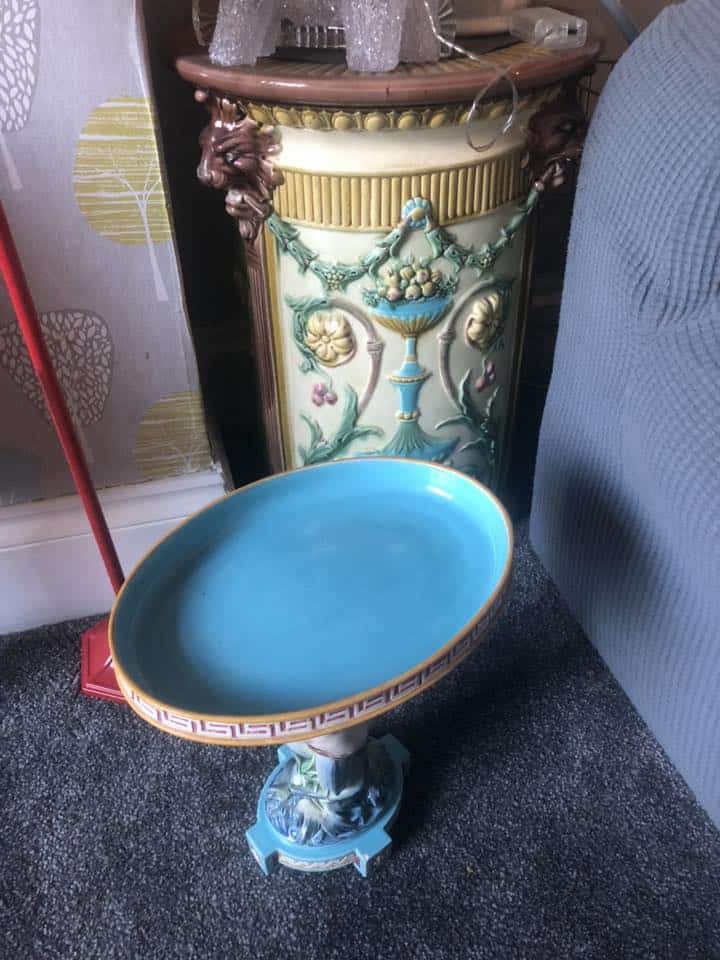
I walked into the charity shop expecting the usual selection of bric-a-brac — a mixture of modern household items, decorative ornaments, and the occasional piece that warrants a second glance. Then, positioned in clear view and given pride of place on a central shelf, I spotted an impressive ceramic comport.
Attached to it was a handwritten label that read: “Minton Style Reproduction – £39.99.”
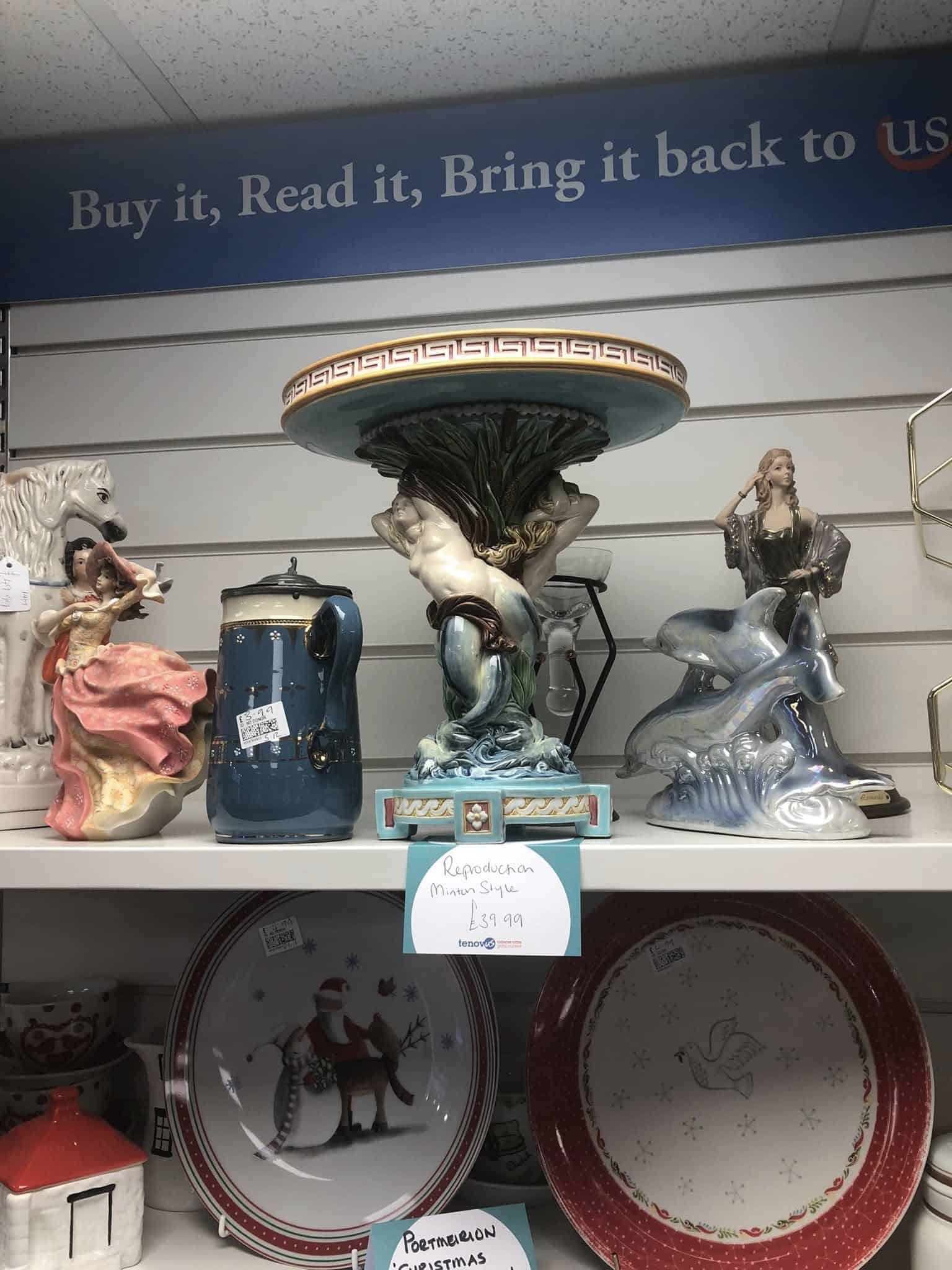
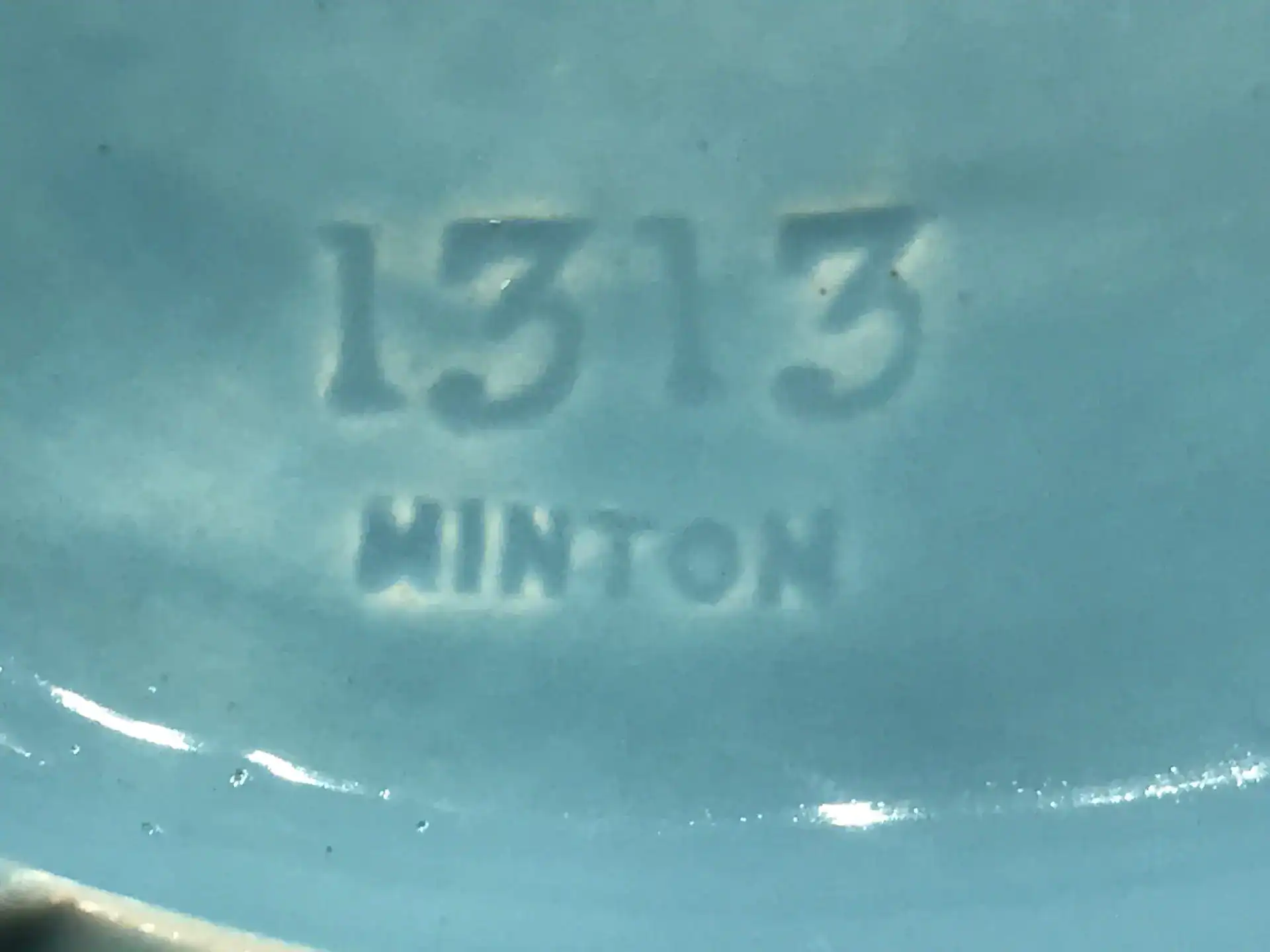
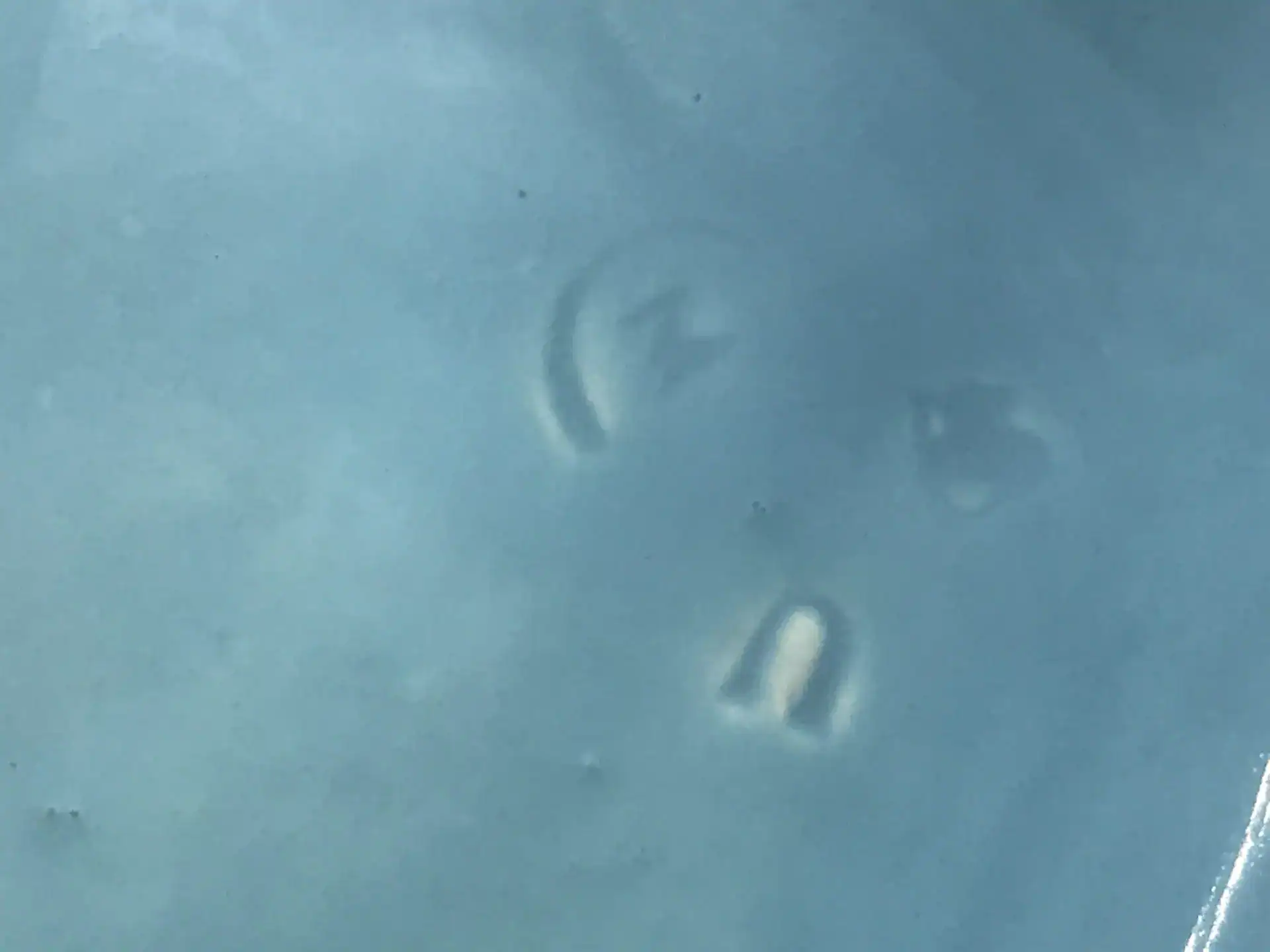
Out of curiosity, I removed the piece from the shelf and began to examine it more closely. Almost immediately, something didn’t sit right with the description. Turning the piece over, I could clearly see that it was impressed “Minton”, complete with the shape number 1313 and period year marks. These are not details one expects to find on a reproduction, particularly one described so casually.
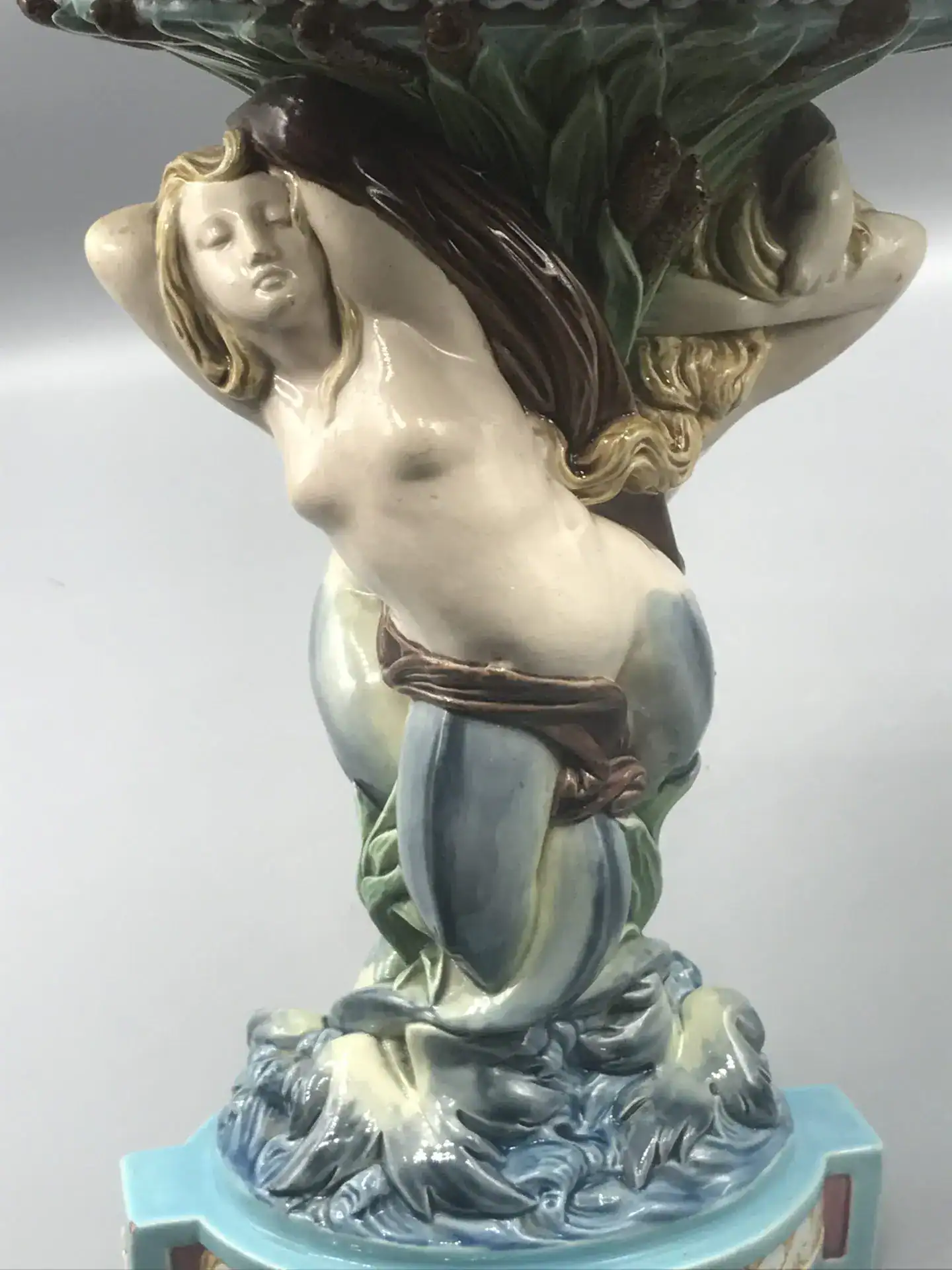
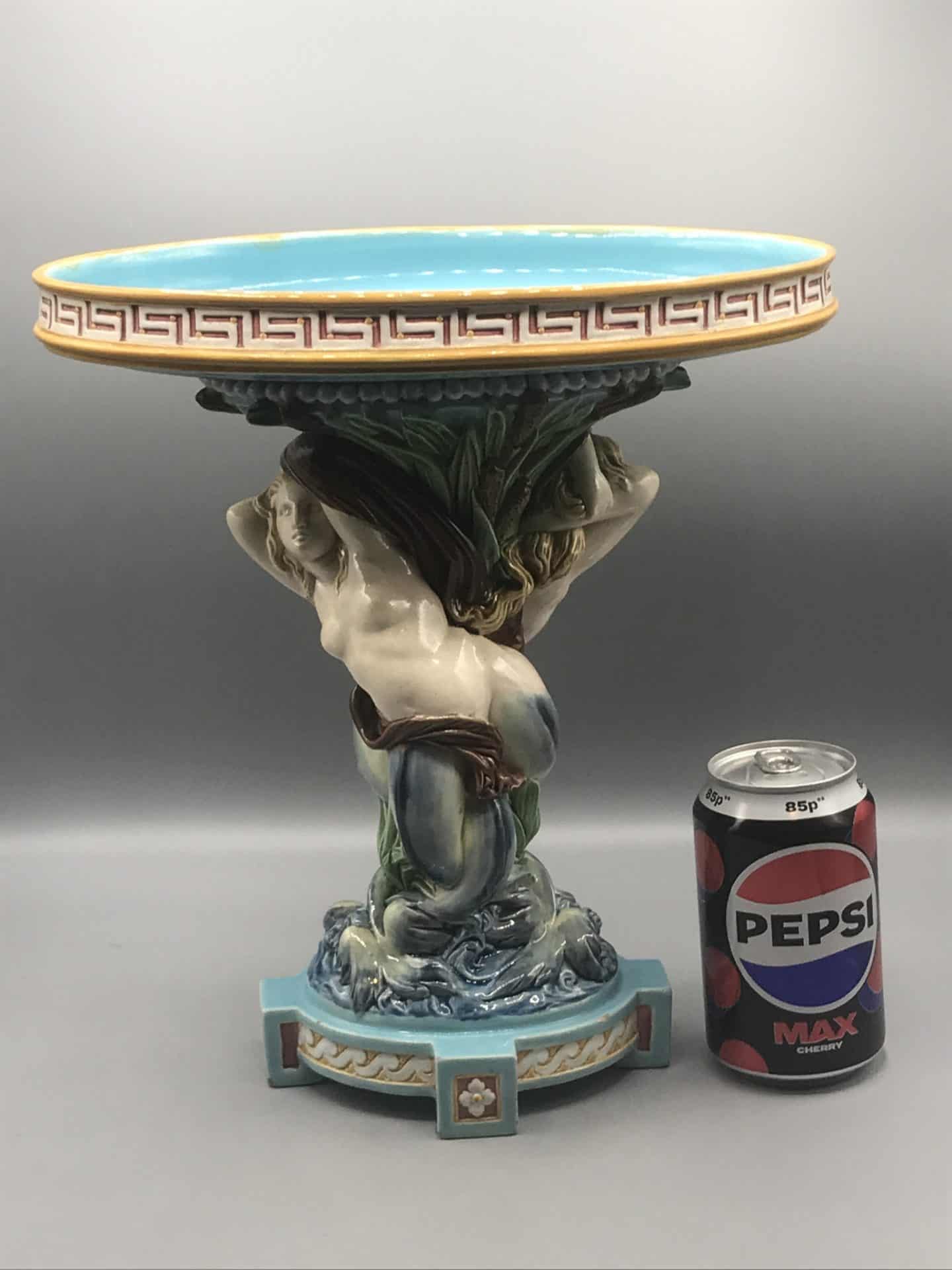
Intrigued, I continued my inspection. The quality of the casting was exceptional, with crisp modelling and strong definition throughout. The colour palette and glazing were entirely consistent with genuine Victorian Minton majolica, and there were small glaze chips present — the kind commonly seen on authentic 19th-century majolica pieces. Crucially, these areas showed the correct age and wear, rather than the sharp or artificial damage often associated with later reproductions.
At that point, everything I was seeing aligned with an original period example rather than a modern imitation. Trusting my experience and instincts, I made the decision to purchase the piece.
Research, Comparison and Verification
Once home, I began the process of research and verification, using every tool available to me. Alongside traditional reference material and my own experience, I also uploaded detailed images to both Gemini and GPT to gather independent opinions. In every instance, the feedback pointed towards the piece being genuine Victorian majolica rather than a reproduction.
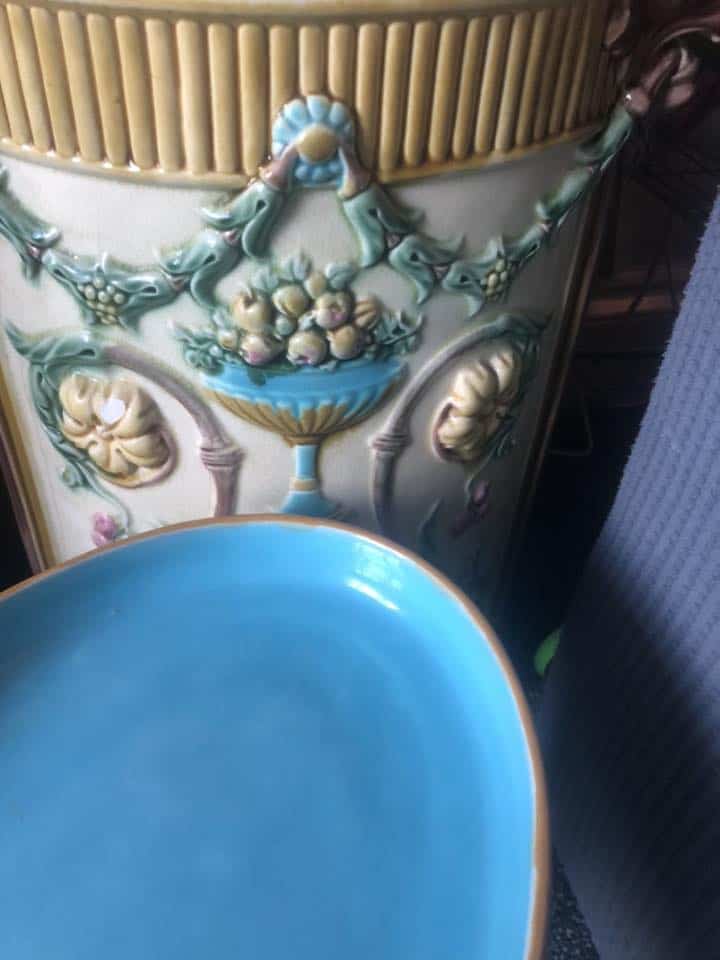
I already own a confirmed piece of Minton majolica, so I placed the two items side by side for direct comparison. The colour palette, glaze tones, and overall finish matched precisely. This is an important test, as colour accuracy is one of the first areas where reproductions tend to fail.
During my research, I also revisited known examples of fake and reproduction Minton majolica. While reproductions certainly exist, many are unmarked on the base, and it is extremely uncommon to see reproductions carrying a correct underglaze Minton mark, a valid shape number, and period year marks, all applied beneath the glaze in the correct manner. These features are consistent with genuine factory production rather than later copies.
Another critical factor was the body of the piece. I have handled a significant amount of modern majolica over the years, much of which is made from a lighter, hollow ceramic body. In contrast, this centrepiece is notably heavy, with the solid earthenware feel expected of 19th-century Minton majolica.
I also observed that many reproductions use colours that are either too bright, incorrect in tone, or simply not part of the period palette. None of those inconsistencies were present here. The more closely I examined the piece, the more confident I became that it was the real thing.
As a final test, I listed the piece on my Facebook page, priced conservatively at £995. In my experience, if something is not genuine, it is immediately challenged — often very publicly. Collectors are quick to point out errors, and rightly so. In this case, no such objections were raised.
Examples of Minton majolica centrepieces can be found priced anywhere from £1,000 to £3,000, depending on form, subject, and condition. While I could not find an exact match for this particular design, the evidence supported both its authenticity and my valuation.
Watch The Full Youtube Haul Video Where I Discovered This Minton Majolica

Why I Created This Guide
Because of this discovery — and the amount of time it took to confirm the details with confidence — it became very clear to me just how difficult it can be to find reliable, practical information on identifying genuine Minton majolica. Much of what is available online is either fragmented, contradictory, or repeated without real hands-on experience behind it.
Even with decades in the antiques trade, access to reference material, and the ability to consult modern tools and knowledgeable communities, this piece required careful consideration. For someone newer to collecting, or without direct experience of handling both genuine and reproduction majolica, the process can be far more challenging.
For that reason, I decided to create this guide.
The aim of this article is to provide a clear, practical, experience-based guide to identifying Minton majolica, using real-world examples rather than theory alone. It is written from the perspective of a working dealer who regularly handles original pieces, modern reproductions, and everything in between.
My hope is that this guide will help collectors, enthusiasts, and fellow treasure hunters better understand what to look for, what to question, and how to approach Minton majolica with confidence — whether in a charity shop, an antiques fair, or an online listing.
Who Were Minton and What Is Majolica
Minton was one of the most important and influential ceramic manufacturers in Britain, founded in Stoke-on-Trent in the late 18th century. By the mid-19th century, Minton had become internationally recognised for innovation, quality, and artistic excellence, supplying ceramics to royal households, major exhibitions, and an expanding global market.
Majolica refers to a type of earthenware decorated with brightly coloured lead-based glazes, typically applied to moulded relief designs. While the term has earlier Italian origins, Victorian majolica as we know it was developed and perfected in Britain during the 19th century.
Minton began producing majolica in the early 1850s and quickly established itself as the leading maker in the world. Their majolica stood apart from competitors due to its superior modelling, rich and balanced colour palettes, and high-quality glaze chemistry. Minton pieces were frequently exhibited at international exhibitions and were widely copied by other manufacturers, though rarely matched in quality.
During the height of production between the 1850s and 1880s, Minton majolica encompassed a wide range of forms, including centrepieces, jardinieres, vases, tiles, and figural wares. These pieces were both decorative and functional, designed for affluent Victorian interiors and public display.
By the late 19th century, Minton’s majolica had become the benchmark against which all other majolica was judged. Even today, it remains the standard collectors refer to when assessing quality, authenticity, and historical importance
What Did Minton Make? From Utility Ware to Decorative Art
Minton’s reputation today is often associated with majolica and decorative ceramics, but the factory’s output was far broader and evolved significantly over time. Understanding what Minton made — and when — is essential to correctly identifying and contextualising their wares.
Early Production: Functional and Table Wares
Minton was founded in 1793, and in its early decades the firm focused primarily on functional ceramics. These included:
- Plain and decorated tableware
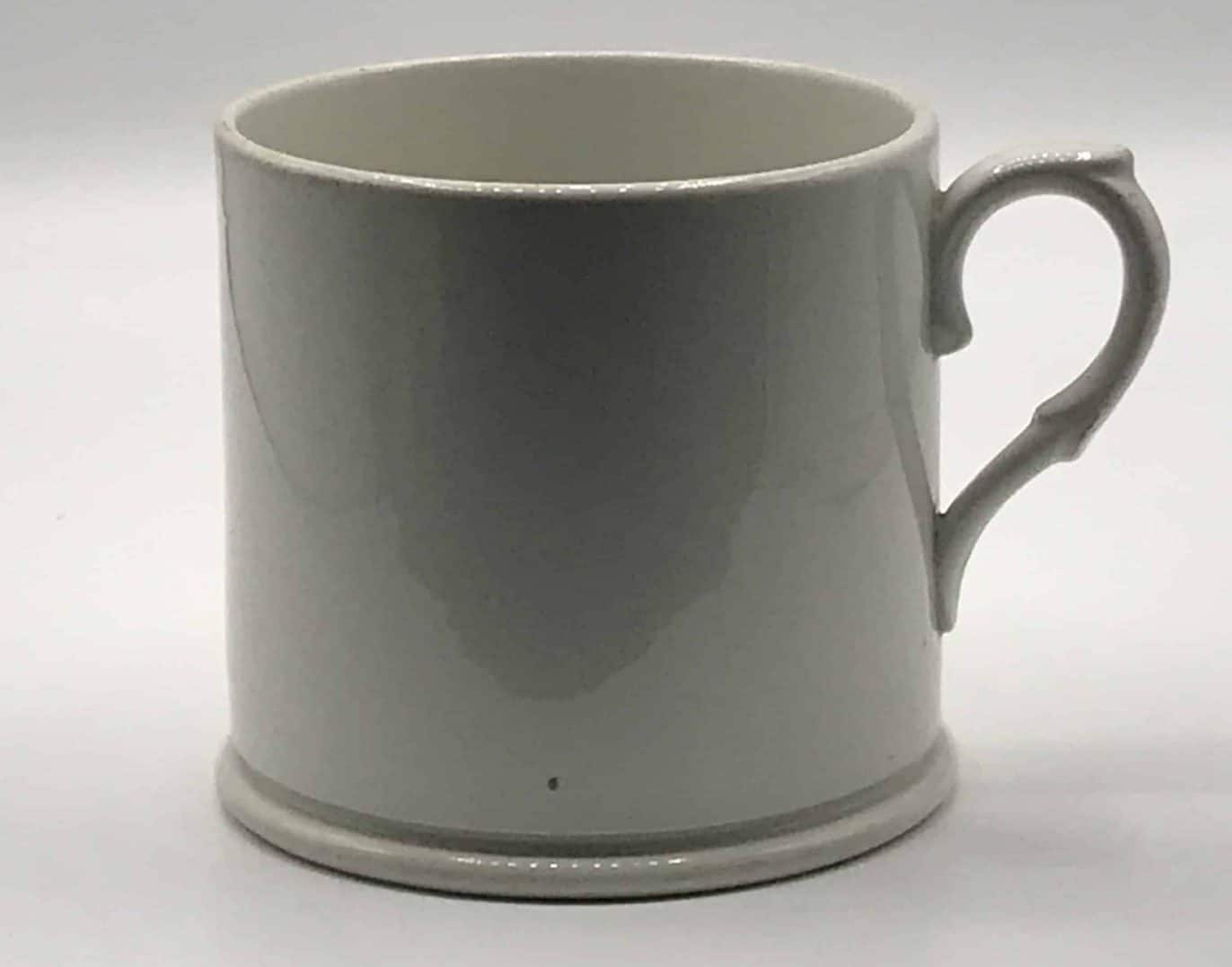
- Tankards, mugs, and drinking vessels
- Domestic utility items
- Earthenware and early porcelain wares
These early pieces were practical in nature, designed for everyday use, but they already displayed the high standards of body quality and firing that would later define the brand.
Expansion into Decorative Ceramics
By the early to mid-19th century, Minton began expanding beyond purely functional wares. This period saw the introduction of:
- Decorative porcelain
- Ornamental vases and centrepieces
- Sculptural and figural wares
- Architectural ceramics, including tiles
This shift was driven by Victorian taste, international exhibitions, and a growing demand for decorative objects in affluent interiors.
The Majolica Revolution (1850s Onward)
In the 1850s, Minton became the leading innovator of Victorian majolica, elevating what could have been a novelty ceramic into a serious decorative art form. From this point onward, Minton produced:
- Majolica centrepieces
- Jardinieres and planters
- Tiles (both decorative and architectural)
- Figural and naturalistic designs
Majolica did not replace Minton’s other production — it sat alongside fine bone china, porcelain, and earthenware — but it became one of the factory’s most influential and widely copied outputs.
Continued Production and 20th-Century Revival
Minton did not stop producing decorative ceramics after the Victorian period. Well into the 20th century, the company continued to make:
- Fine bone china
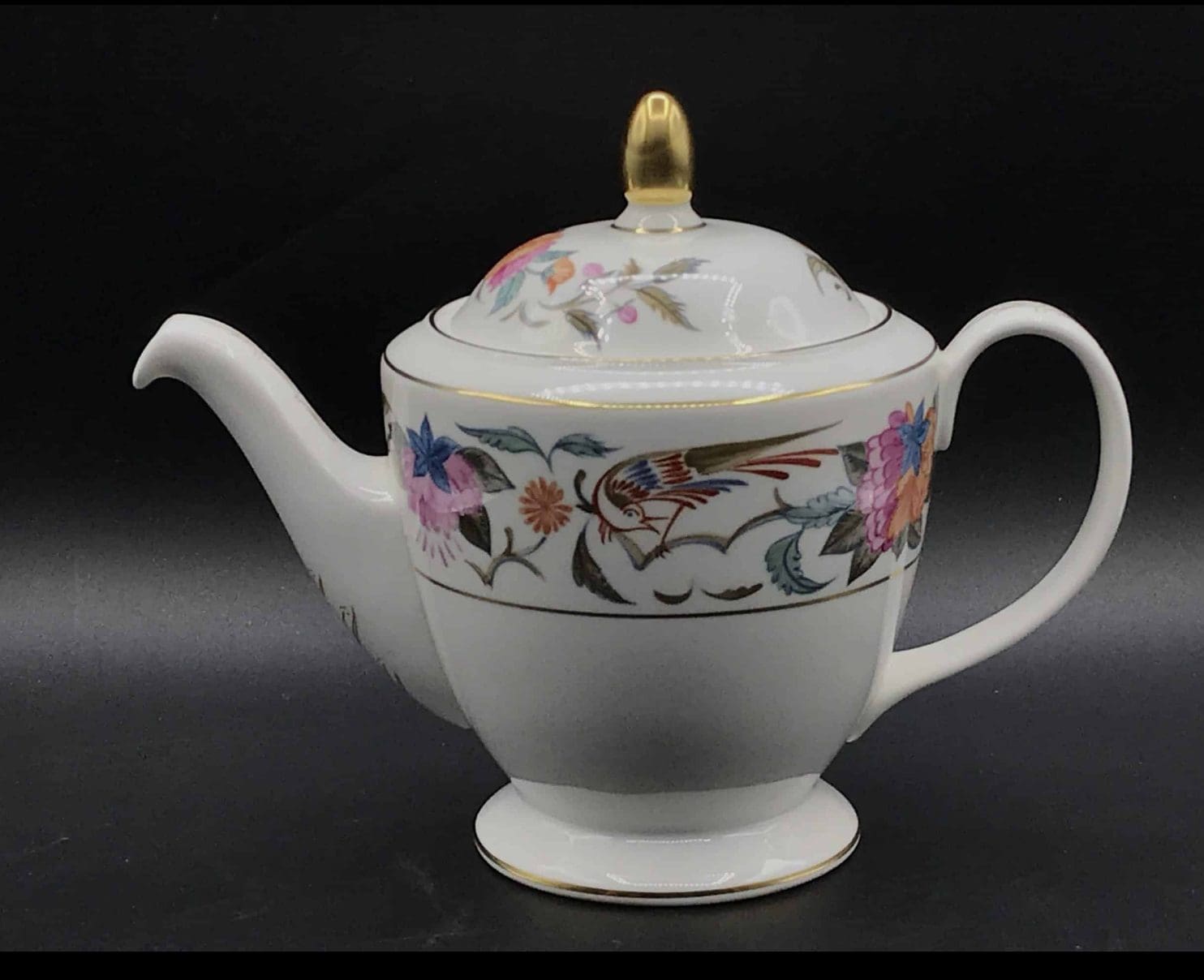
- Decorative teapots and tableware
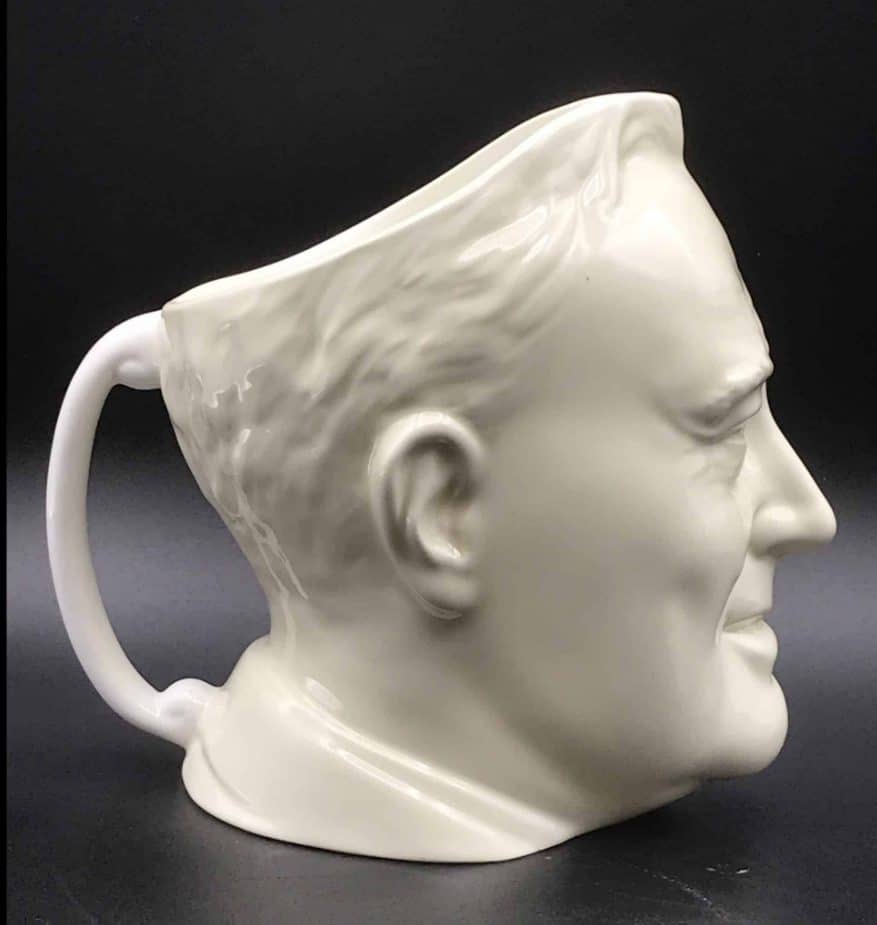
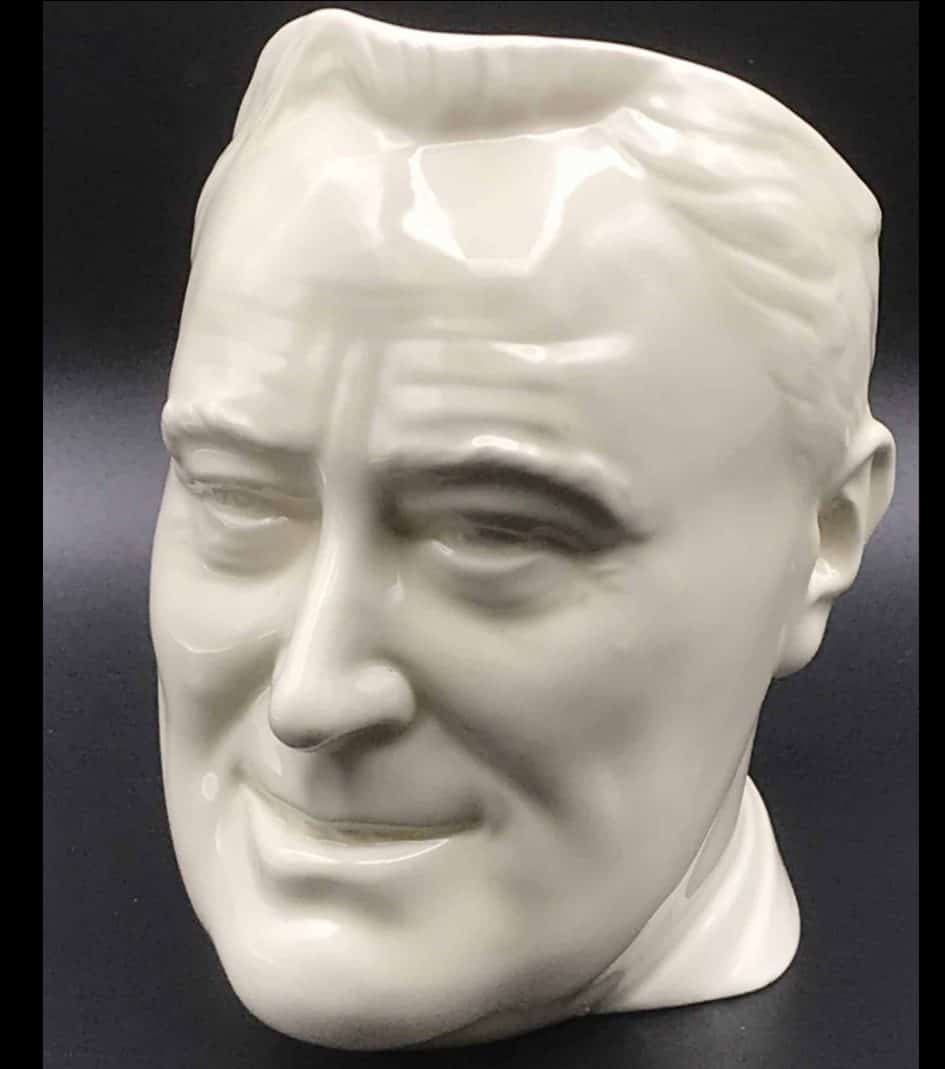
- Character jugs
- Revival and archive-inspired designs
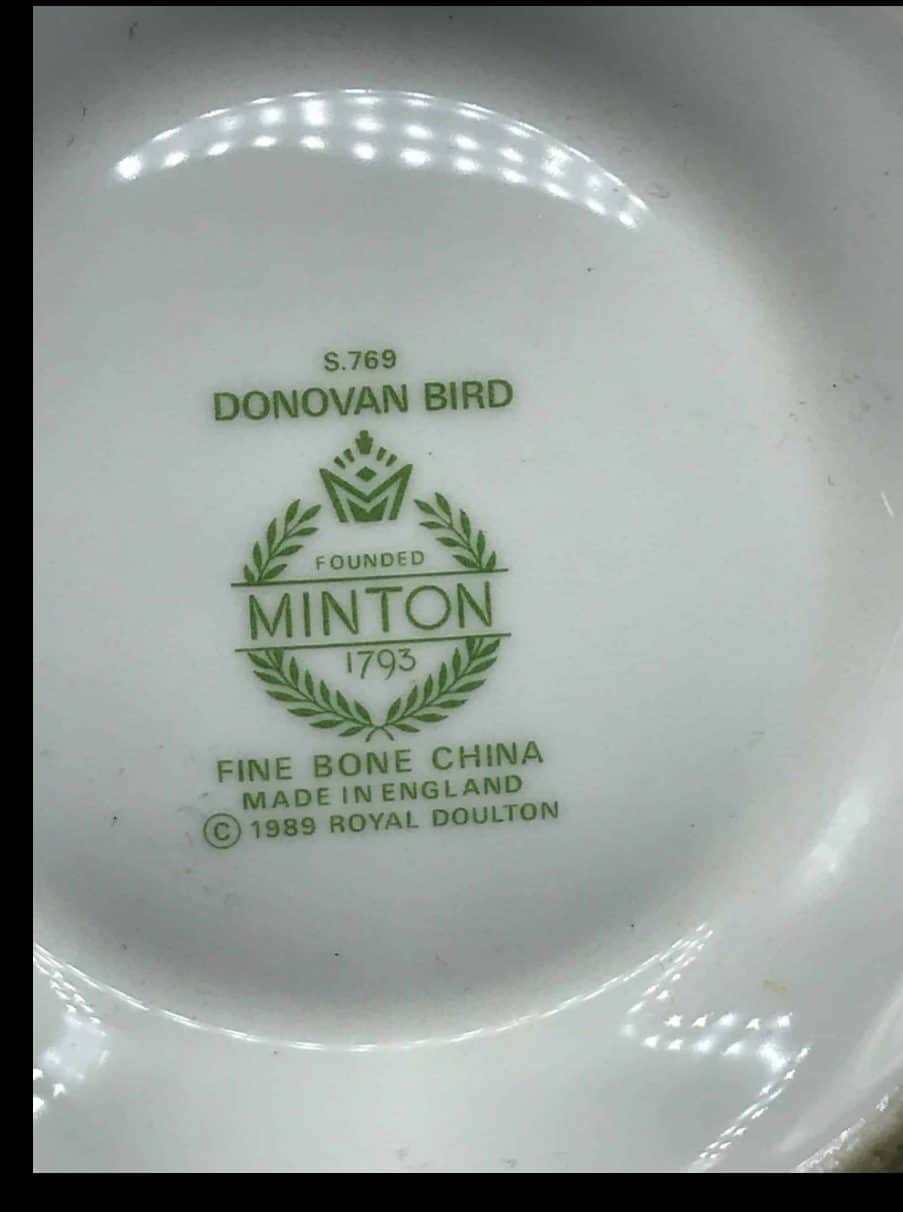
A good example of this is the Minton Archive Collection Monkey Teapot, produced in 1993 under Royal Doulton ownership. While inspired by a circa-1860 design, it is clearly marked, dated, and made using modern fine china rather than Victorian earthenware. Pieces like this demonstrate the enduring popularity of Minton designs while also highlighting the importance of understanding production periods and materials.
Examples from My Shop Visit Our Shop
To illustrate the breadth of Minton’s production, the following examples are shown alongside this section:
- An antique Minton tankard, representing early functional ware
- A Minton character jug, demonstrating later decorative porcelain
- A 20th-century Minton teapot, showing continued production and revival designs
These pieces are very different in purpose, material, and date, yet all fall under the Minton name — reinforcing why careful identification and context are essential when assessing any Minton object.


How to Identify Genuine Minton Majolica
Identifying genuine Minton majolica requires looking at a combination of features, rather than relying on a single mark or label. Many reproductions imitate the general look, but few replicate all the correct characteristics found on original Victorian examples.
1. Factory Marks and Impressed Details
Genuine Minton majolica is usually marked on the base with an impressed Minton factory mark, often accompanied by a shape or pattern number and, in many cases, date or workman’s marks. These are typically impressed into the clay and sit beneath the glaze, not printed or applied on top.
Reproductions are often unmarked, incorrectly marked, or carry surface-applied marks that lack depth and wear.
2. The Ceramic Body
Authentic Minton majolica is made from heavy earthenware. When handled, it has a solid, weighty feel. Many modern reproductions are made from lighter, hollow ceramic bodies or porcelain, which immediately feel different in the hand.
3. Glaze Quality and Colour Palette
Minton’s lead-based glazes are rich, translucent, and sit deeply within the moulded decoration. Colours are strong but controlled, with a natural harmony between tones.
Reproductions frequently use colours that are too bright, flat, or incorrect for the period, or palettes that were not used by Minton in the 19th century.
4. Modelling and Casting Quality
The modelling on genuine Minton majolica is crisp and confident, with strong undercutting and well-defined detail. Figures, foliage, and decorative elements should show depth and clarity rather than softness.
Later reproductions often appear blurred or shallow due to worn moulds or lower production standards.
5. Signs of Age and Wear
Victorian majolica commonly shows minor glaze chips, light wear to high points, and age-related staining to exposed earthenware. These signs should appear natural and consistent. Artificial distressing or perfectly clean damage can be a warning sign.
6. Comparison and Context
When possible, compare a suspected piece with a known genuine example. Differences in colour tone, glaze depth, and weight become far more obvious side by side. Context also matters — genuine Minton majolica often appears where it is least expected, but it will always stand up to close scrutiny.
Quick Checklist for Identifying Genuine Minton Majolica
Use this checklist when inspecting a piece. A genuine example will usually meet most or all of these points.
- Impressed Minton mark present, set beneath the glaze, not printed or surface applied
- Shape or pattern number impressed into the base, not painted
- Additional impressed marks such as date or workman’s marks may be present
- Heavy earthenware body with a solid, weighty feel
- Rich lead-glazed surface with depth and translucency
- Correct Victorian colour palette, strong but not overly bright
- Crisp modelling and deep moulding, with clear definition and undercutting
- Natural age-related wear, including small glaze chips and surface wear
- Exposed earthenware in chips showing buff or cream tones with age staining
- Glaze pooling in recesses and thinning on high points
- No modern filler or repainting visible under close inspection
If several of these elements are missing, the piece should be approached with caution.
Minton Date Cyphers and Factory Marks
(Quick Reference Guide)
Impressed Factory Marks
| Mark Type | What to Look For | What It Indicates |
| MINTON (impressed) | Impressed into the clay beneath the glaze | Genuine factory production |
| MINTONS (with S) | Later impressed factory mark | Used from the late 19th century onward |
| Under-glaze impression | Mark sits beneath glaze, softened by firing | Correct for Victorian majolica |
| Printed or surface marks | Mark sits on top of glaze | Usually later or decorative wares |
Shape / Pattern Numbers
| Feature | Description |
| Numeric shape number | Usually 3–4 digits, impressed |
| Purpose | Internal factory reference for moulds and forms |
| Placement | Typically on the base or underside |
| Collector importance | Confirms correct model attribution |
Date Cyphers (Simplified Guide)
Minton used letter and symbol cyphers to record production periods. These systems changed over time, and letters were reused, so cyphers should never be relied on in isolation.
| Cypher Type | Common Form | Notes |
| Single letters | e.g. U, X, etc. | Used in various date systems |
| Letters in circles | Often mistaken for dates | Frequently workman or batch marks |
| Multiple impressed marks | Clustered near base | Typical of Victorian production |
⚠️ Important Note:
Minton date cyphers can be misinterpreted when viewed without context. Always assess them alongside body type, glaze, modelling quality, and shape number.
Workman’s and Batch Marks
| Feature | Meaning |
| Small letters or symbols | Identified individual workers or batches |
| Often inconsistent | Normal for Victorian factory practice |
| Not always documented | Absence does not imply reproduction |
What a Genuine Minton Majolica Base Often Shows
- Impressed MINTON factory name
- One or more numeric shape numbers
- Additional letters or symbols, impressed
- All marks set beneath the glaze
- Glaze pooling around impressed areas
Understanding Minton Date Codes and Marking Practices
One of the most frequently misunderstood aspects of majolica collecting is factory marks — particularly date cyphers. This confusion is understandable, as many Victorian potteries marked their wares inconsistently or not at all. However, Minton stands apart in this respect.
Minton had been marking their ceramics as early as 1805, but in 1842 the factory introduced a formal system of impressed date codes on earthenware. This system was already well established by the time Minton began producing majolica in the early 1850s, which explains why genuine Minton majolica is so often datable with reasonable accuracy.
From around 1851 onward, Minton typically combined several impressed marks on their majolica pieces. These may include the factory name MINTON (or MINTONS after 1873), a numeric shape or pattern number, and additional impressed symbols such as month letters or workman’s marks. Not every piece displays every mark, but most will show at least some of them.
Crucially, all genuine Minton majolica marks are impressed into the clay body beneath the glaze. They are never printed on top of the glaze. On some pieces, thick or heavily pooled glaze can soften or partially obscure these impressions, which is normal and should not be mistaken for absence.
It is also important to understand that some smaller Victorian potteries later adopted similar date-code systems. For this reason, a date cypher alone does not confirm Minton production. The presence of an impressed MINTON factory mark alongside correct materials, glaze, and modelling remains the strongest indicator of authenticity.
This consistent approach to marking is one of the reasons Minton majolica is so highly regarded today — and one of the reasons genuine pieces can still be confidently identified when examined carefully.

Collector Advice
No single mark proves authenticity. Genuine Minton majolica is identified by the combination of marks, materials, weight, glaze behaviour, and modelling quality.
Marks support the story — they do not replace judgement.
How to Identify Fake or Reproduction Minton Majolica
Fake and reproduction Minton majolica exists, and while some copies are decorative, many fall short once examined closely. The key to identifying a reproduction is recognising what feels wrong, rather than looking for a single flaw.
1. Incorrect or Missing Marks
Many reproductions are completely unmarked on the base. Others may carry marks that are printed, shallow, or applied on top of the glaze. It is extremely uncommon to see a reproduction with a correct impressed Minton mark, accurate shape number, and period-style date marks all beneath the glaze.
2. Light or Hollow Ceramic Body
Modern reproductions are often made from lighter, hollow ceramic bodies or porcelain. When handled, they lack the weight and solidity of genuine Victorian earthenware majolica.
3. Incorrect Colours or Overly Bright Glazes
One of the most common giveaways is colour. Reproductions frequently use glazes that are too bright, flat, or chemically sharp, or colours that were simply not part of Minton’s Victorian palette. Genuine Minton colours have depth and balance rather than visual harshness.
4. Soft or Blurred Modelling
Many copies suffer from poor mould quality. Details may appear rounded, shallow, or blurred, especially in areas such as faces, foliage, scales, or borders. Genuine Minton modelling is confident, crisp, and deeply defined.
5. Artificial or Inconsistent Wear
Reproductions may show damage that looks forced or inconsistent, such as clean white chips, sharp breaks, or staining that does not match the age of the piece. Authentic majolica wear develops slowly and naturally, often concentrated on feet, edges, and high points.
6. Incorrect Glaze Behaviour
Modern glazes often sit flat on the surface, lacking the natural pooling and thinning seen in Victorian lead glazes. On genuine pieces, glaze pools in recesses and thins on raised areas, creating subtle variation.
7. Wrong Materials Used
Some modern “majolica-style” pieces are made using materials that simply do not belong to the period, including resin or composite ceramics. These often feel cold, brittle, or unnaturally smooth.
Clarifying “Reproduction” vs “Style”
It is important to distinguish between reproduction and style, as the two are often confused. Not all old majolica is Minton, and age alone does not make a piece a Minton product.
During the 19th century, Minton’s success led to many contemporary competitors producing majolica in a similar style. Makers such as Joseph Holdcroft and others produced genuine Victorian majolica that is antique in its own right, but not made by Minton. These pieces should be described as 19th-century majolica by the relevant maker, not as Minton.
By contrast, modern reproductions, most commonly from the mid to late 20th century, are decorative pieces made long after the Victorian period. These are often described as Minton style or majolica style and are not antiques, even if they imitate earlier designs.
Understanding this distinction is essential. Minton majolica refers specifically to pieces produced by the Minton factory, and while other majolica can be attractive and collectible, correctly identifying the maker preserves both historical accuracy and the prestige of the Minton name.
Final Advice
No single detail proves a piece is fake. However, when multiple warning signs appear together, the likelihood of a reproduction increases dramatically. Genuine Minton majolica will withstand close inspection from every angle — reproductions rarely do.
Archival Context and Shape Numbers
During my research, one point worth noting is the role of Minton’s original shape books, which are held today within the Minton Archive in Stoke-on-Trent. These factory records are the primary source used by museums and scholars to identify original models, production periods, and, in some cases, the designers or modellers involved.
The shape number 1313 corresponds to a mid-to-late Victorian production period, which aligns with the materials, glaze, and modelling of this centrepiece. While not all shape numbers are currently accessible through public online databases, the archive remains the definitive authority for confirming original design attribution where records survive.
Given the strong figural modelling of this piece, it is consistent with the type of work produced by Minton’s leading modellers during this period. However, without direct archive confirmation, any attribution to a specific individual should remain carefully qualified.
This highlights an important point for collectors: not every genuine Minton design is fully documented online, and the absence of an exact match does not imply a reproduction.
Later Minton Majolica and 20th-Century Revival Pieces
Minton’s influence did not end with the Victorian period. The enduring popularity of their majolica designs led to later revival and commemorative productions well into the 20th century. An excellent example of this is the Minton majolica Monkey Teapot, produced in 1993 as part of the Minton Archive Collection by Royal Doulton. This piece was clearly marked, dated, and issued as a limited edition, demonstrating how strongly Minton’s original designs continued to resonate with collectors more than a century after their introduction.
These later pieces are not Victorian majolica, and they should never be confused with 19th-century originals. They are typically made from fine china rather than heavy earthenware, carry printed or transfer marks rather than impressed factory marks, and are fully documented with modern production details, edition numbers, and dates. Their value lies in collectability, design heritage, and decorative appeal, rather than age.
Including examples like this helps illustrate an important point: Minton’s majolica designs were so successful that they remained desirable long after the original production period had ended. This sustained interest is one of the reasons Victorian Minton majolica continues to be collected today — and why the market still produces confusion between original, revival, and reproduction pieces.


How Much Is Minton Majolica Worth Today?
Minton majolica remains collectible and desirable, but values have softened from the peak seen roughly a decade ago when even single tiles could command high prices. Today’s market is more varied depending on form, rarity, condition, and venue. Current listings and auction results show a broad range of real-world values.
Minton Majolica Tiles
- Smaller relief moulded tiles in modest condition often appear around £60–£250 at auction or online listings.
- Larger or rare Victorian Minton tiles, especially architectural pieces, can approach £300–£500 depending on subject and condition.
Vases and Smaller Decorative Pieces
- Common Victorian vases, jugs, and smaller ornamental forms typically trade in the £200–£600 range.
- More unusual figural forms or larger decorative vases can reach £600–£1,200+ at auction or dealer sales.
Jardinières, Planters, and Larger Forms
- Standard 19th-century majolica jardinières or planters often list around £300–£1,000 in dealer shops.
- Rare or highly executed examples, especially with elaborate decoration, can sit above £1,000 — particularly in specialist galleries.
Majolica Centrepieces
- Centrepieces or larger figural compositions (like your mermaid example) are among the higher-value categories. Auction records show a range of outcomes:
Exceptional and Exhibition Pieces
- Truly rare or historically notable examples — especially very large or exhibition pieces — can transcend these bands. There are documented cases where major masterpieces bought cheaply decades ago have sold well into several thousands at auction in recent years.
(Real-world outcomes vary widely by rarity, subject, and buyer interest.)
Market Context: Peak vs Today
A decade ago, majolica prices — including Minton — were stronger across the board. Tiles could often fetch £100–£200+ easily, and larger forms regularly exceeded four figures. Today the market is more price-sensitive, with condition and specificity playing a larger role, and values varying significantly between retail listings, online marketplaces, and auction results.
Summary Value Bands (2025)
| Category | Typical Value |
| Small Tiles | £60–£300 |
| Small Vases / Jugs | £200–£600+ |
| Medium Decorative Forms | £500–£1,200 |
| Jardinières & Planters | £300–£1,000 |
| Majolica Centrepieces | £600–£2,000+ |
| Exceptional Rare Examples | £2,000+ and up |
(Actual realised prices vary by condition, provenance, auction house, and market demand.)
It is also worth noting that reproductions have their place in the market. There is a strong decorative audience for majolica-style pieces, and many people simply enjoy the look, regardless of age. In some cases, collectors may choose a reproduction as a placeholder for a design they admire but cannot currently find or afford as an original. Even so, a large and well-made majolica centrepiece sold as a reproduction would still normally command a few hundred pounds in today’s market. That context makes discoveries like this particularly striking, as the piece was undervalued even on its own stated terms.
How Often Does Minton Majolica Appear in Charity Shops?
Stories of finding Minton majolica in charity or thrift shops are rare, but they do happen, and when they do they tend to generate a lot of interest among collectors and dealers alike.
It is not unheard of for collectors to stumble across majolica pottery in places where most people would expect only everyday bric-a-brac. In hobbyist and collector groups, there are real examples of people finding late 19th-century majolica pieces on thrift store shelves for just a few pounds and recognising them as genuine antiques rather than decorative reproductions. Facebook
Occasionally, well-made 19th-century pieces advertised with low prices (sometimes misdescribed entirely) appear on marketplace listings that likely originated from thrift or second-hand environments.
There are also documented cases of very significant Minton majolica items that had been kept in ordinary domestic settings for decades — acquired cheaply or simply inherited — and later realised to be valuable antiques. One such piece, bought many years earlier for a modest sum, later sold at auction for well over £6,000 after recognition of its rarity and size.
While these examples show that genuine Minton majolica can still turn up in unexpected places, it’s important to understand that such finds are uncommon. Most charity shop ceramics are modern, decorative, or unremarkable. However, with experience and a keen eye, rare and valuable historic pieces like Minton majolica can sometimes be uncovered by chance.
How to Care for Minton Majolica
Minton majolica is durable for its age, but it requires gentle and informed care to preserve both its appearance and value. Most damage occurs not through age, but through incorrect cleaning or handling.
Handling and Placement
Always lift majolica pieces from their strongest points, never by rims, handles, or decorative elements. Large centrepieces and jardinieres should be placed on stable, level surfaces and kept away from areas where they could be knocked. Avoid positioning pieces near heat sources or in direct sunlight, as temperature changes can stress the glaze over time.
Cleaning
Cleaning should be kept to a minimum. Use only a soft, dry brush or a lightly dampened cloth to remove surface dust. If necessary, plain lukewarm water may be used sparingly.
Never soak majolica, and avoid detergents, bleach, vinegar, or abrasive cleaners. Victorian lead glazes are porous, and liquids can penetrate through cracks or glaze losses, causing long-term damage or staining.
Glaze Chips and Wear
Small glaze chips and surface wear are common and expected on 19th-century majolica. These areas should be left alone. Do not attempt to seal, fill, or disguise chips unless advised by a professional conservator, as amateur repairs can significantly reduce value.
Storage
If storing majolica, wrap pieces in acid-free tissue and keep them in a dry, stable environment. Avoid plastic wrapping that traps moisture. Heavy pieces should never be stacked directly on top of one another.
Restoration and Repairs
If restoration is required, always consult a professional ceramic conservator. Poor restoration is far more damaging to value than honest wear. In many cases, leaving a piece untouched is preferable to over-intervention.
Final Advice
The best care for Minton majolica is restraint. Gentle handling, minimal cleaning, and a stable environment will ensure these pieces continue to survive — and be enjoyed — well into the future.
Displaying Minton Majolica and Preserving Its History
Displaying Minton Majolica
Minton majolica was designed to be seen and appreciated, and careful display allows its colour, form, and modelling to be enjoyed safely. Large pieces such as centrepieces, jardinieres, and stands should always be displayed on stable, level furniture capable of supporting their weight. Avoid placing majolica near edges, in high-traffic areas, or where it could be accidentally knocked.
Lighting should be gentle and indirect. While normal ambient light is fine, prolonged exposure to strong sunlight can cause gradual fading or stress to the glaze. A consistent indoor environment, free from extreme temperature changes or excess humidity, is ideal.
If displayed on shelving or cabinets, ensure there is sufficient space around the piece so it does not come into contact with surrounding objects. Majolica should never be stacked or used functionally if it is purely decorative.
Documenting and Keeping the History with the Piece
One of the most important — and often overlooked — aspects of collecting is preserving the history of an object. Whenever possible, documentation should be kept with the piece itself. This can include photographs, written descriptions, research notes, purchase details, and any correspondence relating to identification or provenance.
In cases like this, where a piece has been carefully researched and authenticated, keeping a printed copy of the research and images with the item ensures that future owners, family members, or caretakers understand its importance. If anything were ever to happen to you, this information can prevent significant pieces from being misidentified, undervalued, or lost.
Even a simple folder explaining what the object is, when it was made, and why it matters can make an enormous difference. Objects without context are often overlooked; objects with history are preserved, respected, and valued.
Conclusion: The Find and the Bigger Picture
Days like this are a reminder of why charity shops are always worth visiting. You can walk into hundreds of shops over a lifetime and find nothing of note, but it only takes one extraordinary discovery to make every visit worthwhile. That single moment of recognition — spotting something special where others see only decoration — is what keeps collectors searching. This find was not about luck alone, but about experience, patience, and being willing to look closely when something doesn’t quite fit its label.
Minton majolica, in particular, rewards that kind of attention. As the finest maker of majolica in the Victorian period, Minton set standards of modelling, colour, and craftsmanship that were widely copied but rarely matched. While the market has softened since its peak, genuine Minton majolica remains historically important, collectible, and increasingly misunderstood. Knowledge now matters more than ever.
Whether discovered in a charity shop, inherited, or acquired deliberately, Minton majolica deserves careful study, honest assessment, and proper care. With the right understanding, these objects continue to tell their story — not just as decorative ceramics, but as lasting pieces of Victorian design and craftsmanship.
For those willing to keep looking, learning, and trusting their judgement, treasures are still out there.
Frequently Asked Questions About Minton Majolica
1. What is Minton majolica?
Minton majolica is Victorian earthenware pottery decorated with brightly coloured lead glazes, produced by Minton in the mid to late 19th century. It is known for bold modelling, rich colours, and high artistic quality.
2. When did Minton make majolica?
Minton began producing majolica in the early 1850s, with peak production running through the 1860s to the 1880s. This period is considered the golden age of Victorian majolica.
3. Is Minton majolica valuable today?
Yes, genuine Minton majolica still holds value, although prices are generally lower than they were around ten years ago. Value depends on form, size, condition, rarity, and market demand.
4. How can you tell if Minton majolica is genuine?
Look for impressed Minton marks beneath the glaze, correct shape or pattern numbers, a heavy earthenware body, rich period-correct colours, crisp modelling, and natural age-related wear.
5. Are there fake or reproduction Minton majolica pieces?
Yes. Reproductions exist and range from decorative copies to higher-quality imitations. Most reproductions are unmarked, incorrectly marked, lighter in weight, or use incorrect colours and glaze finishes.
6. Do reproductions have any value?
They can do. Decorative reproductions still appeal to buyers who like the look of majolica, and larger or well-made examples can sell for several hundred pounds depending on quality and size.
7. Why is Minton majolica heavier than modern pieces?
Victorian Minton majolica was made from solid earthenware designed to support large, sculptural forms. Many modern pieces are hollow or made from lighter ceramic bodies.
8. How much is a Minton majolica tile worth?
Today, most Minton majolica tiles sell between £60 and £300 depending on size, subject, and condition. Rare or architectural examples can be higher.
9. How much are Minton majolica centrepieces worth?
Centrepieces are among the most desirable forms. Depending on size, design, and condition, they typically range from £600 to £2,000+, with exceptional examples exceeding this.
10. Can you still find Minton majolica in charity shops?
It is rare, but it does happen. Most charity shop ceramics are modern, but with experience and careful inspection, genuine Victorian pieces can occasionally still be found.
11. How should Minton majolica be cleaned?
Only gentle cleaning should be used. Dust with a soft brush or cloth, and avoid soaking, harsh cleaners, or chemicals, as lead glazes and earthenware bodies are porous.
12. Should Minton majolica be restored?
In most cases, honest wear is preferable to poor restoration. If restoration is needed, it should only be carried out by a professional ceramic conservator.
13. Do people still collect Minton majolica?
Yes. Minton majolica remains actively collected by enthusiasts around the world. While prices are more measured than in the peak of the last decade, there is still a dedicated community of collectors, dealers, and interior buyers who value original Victorian pieces.
14. Is Minton majolica worth investing in?
Minton majolica can be a reasonable long-term collectible, but like most decorative antiques its value depends on form, rarity, condition, and market trends. It should be viewed more as collectible art and heritage, rather than a speculative financial investment.
15. Does Minton majolica hold its value?
Many well-made examples retain value over time, especially classic forms and unusual models. However, the market fluctuates, and pieces generally appreciate slowly. Originals in excellent condition remain more stable in value than mass-produced decorative items.
16. Was there anyone better than Minton at majolica?
Minton is widely regarded as the benchmark for Victorian majolica. Other respected makers included George Jones & Sons, Wedgwood, Shaw & Copeland, and Doulton Lambeth, but few matched Minton’s combination of sculptural quality, innovative glazes, and international reputation.
17. Who were the most famous artists or modellers at Minton?
Several modellers contributed to Minton’s success, but notable figures include:
- Albert-Ernest Carrier-Belleuse — a leading 19th-century sculptor who influenced many Minton forms.
- Hughes Protat — known for large figural designs, especially marine and animal subjects.
Their works are often recognised by strong modelling, dynamic composition, and confident detail.
18. What is the best price ever achieved for Minton majolica?
Auction records vary, but exceptionally rare or large pieces have sold for several thousand pounds at major houses. In one documented case, a significant Victorian centrepiece originally acquired cheaply sold for well over £6,000 at auction. Prices depend heavily on rarity, condition, and provenance.
19. Is there anything rare I should look for in Minton majolica?
Yes — certain forms and subjects are genuinely rare and more collectible:
- Large figural centrepieces and elaborate jardinieres
- Limited production ornamental groups
- Pieces modelled by notable designers (e.g., Carrier-Belleuse or Protat)
- Tiles with unusual subjects or archival documentation
- Items with intact factory marks, shape numbers, and date cyphers
Unusual glazes or colour combinations can also increase collector interest.
20. Are there regional differences in Minton majolica styles?
Minton majolica was primarily produced in England, and its styles reflect Victorian aesthetics rather than regional variations. However, pieces made for export markets or specific retailers sometimes show subtle design differences. Genuine Minton always maintains high modelling and glaze quality.
21. How often do truly exceptional Minton pieces turn up?
Authentic, museum-quality examples are uncommon and most often appear through specialist auctions, estates, or dealer networks rather than charity shops. Finds like the one in this article are rare, which is part of what makes them exciting to collectors.
22. Can Minton majolica be insured and how should it be valued for insurance?
Yes — important pieces should be professionally valued and insured under a fine art or antiques insurance policy. Replacement valuations often exceed retail listing prices to account for sourcing genuine pieces. A detailed description, photos, and provenance notes are essential for accurate coverage.
Further Visual Reference: Studying Known Fakes
While this guide is designed to give you a solid, practical understanding of how to identify genuine Minton majolica, there is no substitute for training the eye. I strongly recommend spending time looking at known fake and reproduction examples alongside original pieces. There are specialist websites dedicated entirely to documenting reproductions and misattributed majolica, and viewing these side by side with authentic examples is extremely valuable. Once you have read and understood the principles in this article, studying those visual comparisons will sharpen your judgement, help you recognise repeating faults, and reinforce what genuine Victorian Minton majolica should look and feel like. Knowledge comes from comparison, and the more you look, the clearer the differences become.
https://etruscanmajolica.blogspot.com/2023/10/incredibly-bad-minton-majolica.html
My links. 🔗 Useful Links
https://www.youtube.com/@AntiquesArena
📚 All My Books for Resellers: https://antiquesarena.com/books/
🌍 Visit My Website: https://www.antiquesarena.com
🔗 All My Links: https://linktr.ee/antiquesarena
💬 Facebook: https://www.facebook.com/AntiquesArena/
🐦 X (Twitter): https://twitter.com/antiquesarena
Patreon https://www.patreon.com/AntiquesArena
WEBSITE
If you’re looking for reliable website hosting, I highly recommend WPX.
I’ve used them for years and they are second to none:
- Multiple plans that grow with your needs
- Fast, knowledgeable 24/7 tech support at no extra cost
- Ability to host your own emails
- If you’d like to support this channel at no cost to you, please consider signing up through my referral link – we receive a small commission, which helps keep the content coming:
- https://wpx.net/?affid=9610
☕ Donate a Coffee: https://paypal.me/AntiquesArena


