I was on a friendly competition day trip through South Wales and beyond with Kieron of Taliesin Antiques, filming a collaborative series of YouTube videos for our respective channels. The plan was simple: a day out, a bit of fun, and hopefully one or two decent finds along the way.
We set off early, leaving at 8:30 am, starting our hunt in Trecastle, working our way through multiple antique centres and charity shops, and eventually finishing the day in Llandudno, arriving home close to 6 pm. What we hadn’t anticipated was just how extraordinary the day would turn out to be.
Instead of a couple of nice pieces, we both filled our boots.
In an antique centre in Llandeilo, I spotted a towering 32-inch silhouette sitting in pride of place on a table, three feet off the floor. It looked magnificent — commanding, sculptural — yet somehow everyone else had walked straight past it.
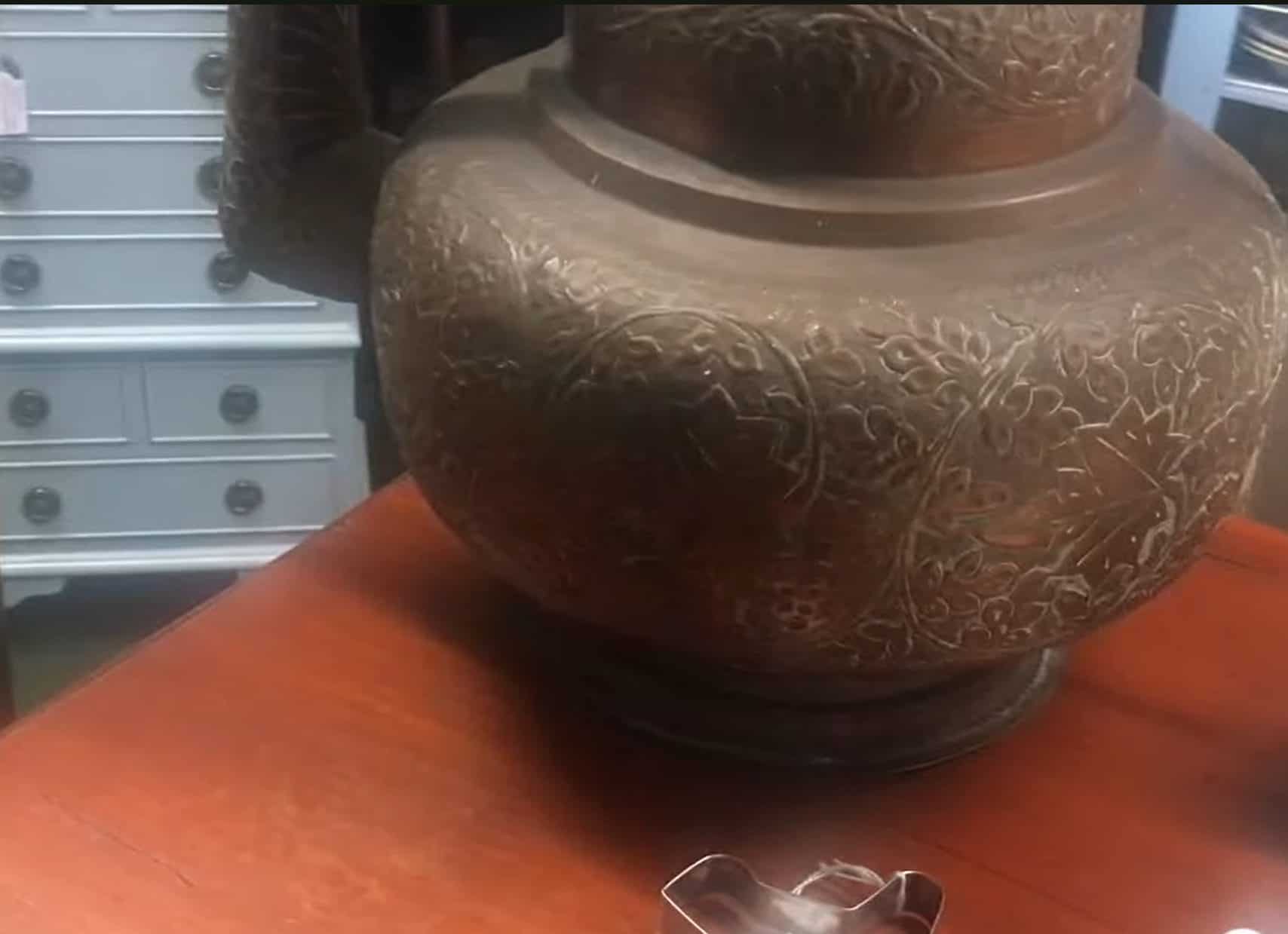

The ticket read £80. With a standard 10% trade discount, I secured this monumental piece for just £72. To the seller, it was likely just a large piece of decorative copper. To me, it was immediately clear this was something far more important: a rare survivor of late 19th-century Ottoman craftsmanship.
Weighing 5kg and constructed from over a dozen individually hand-formed and soldered sections, this ewer stands apart from the countless Middle Eastern “style” objects that dominate the decorative market today. It is not a lamp conversion, not tourist ware, and not a modern reproduction. This is a genuine, hand-raised vessel, made using traditional Ottoman metalworking techniques.

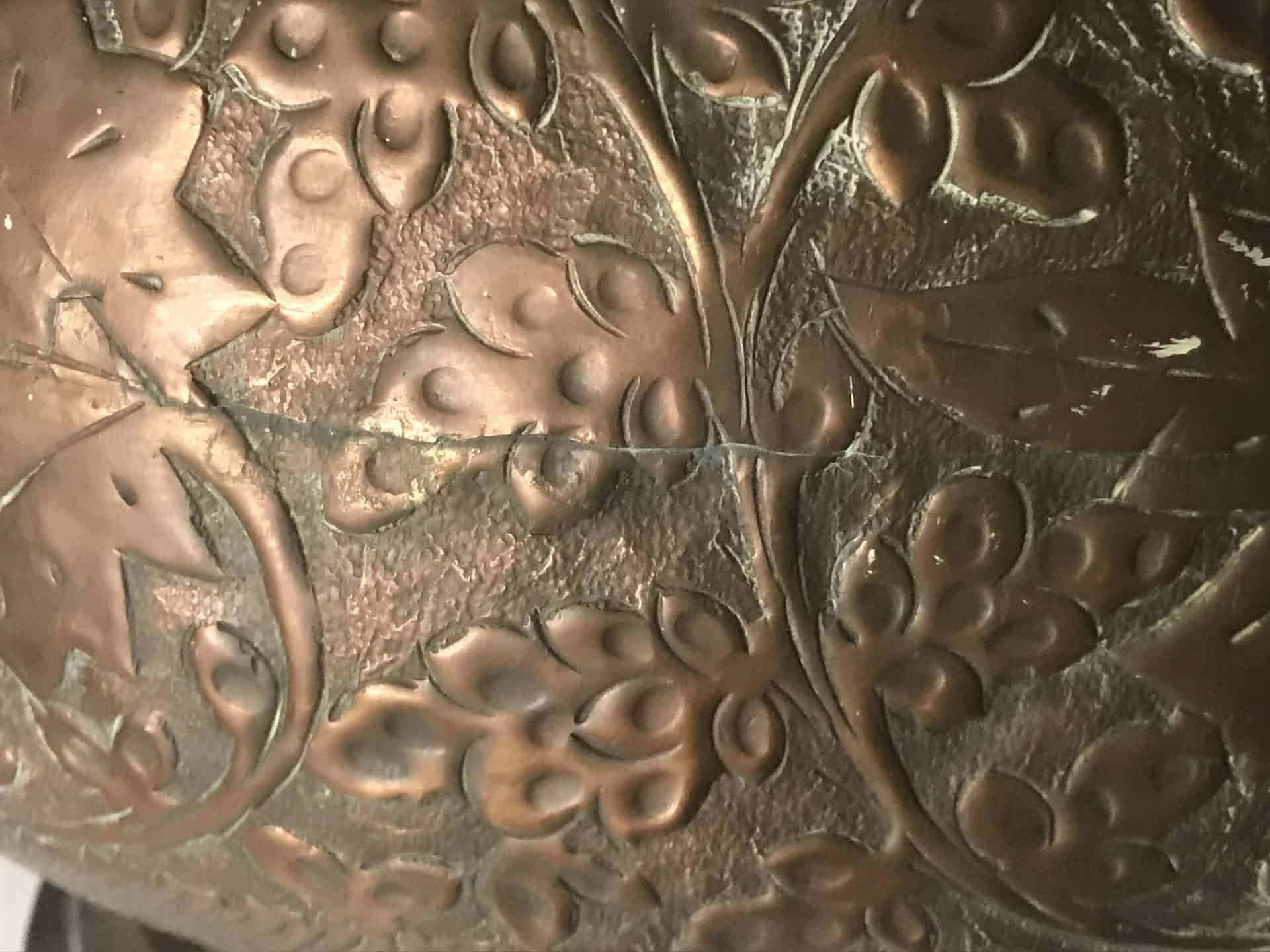
The bulbous body is assembled from multiple sections joined both vertically and horizontally, with repoussé decoration that aligns perfectly across every seam — a level of precision that only comes from skilled, time-intensive workmanship. The tall baluster neck, domed lid with finial, and single swan-head spout all conform to recognised Ottoman forms of the period.
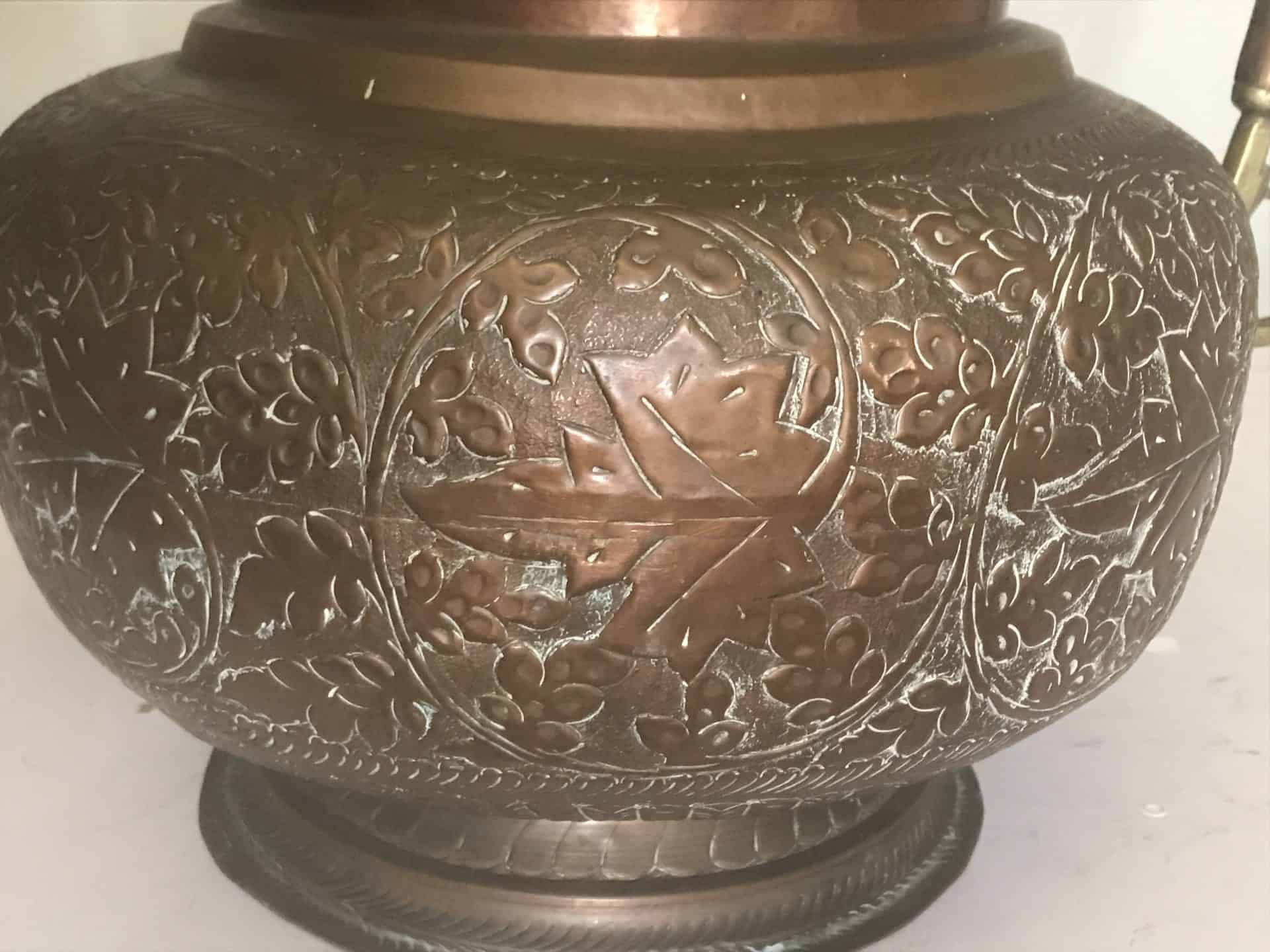

Ottoman metalwork of this era balanced utility, symbolism, and architectural presence in a way few traditions ever achieved. Pieces of this scale were not made casually; they were intended to command space and attention within elite interiors.
Just as important is what hasn’t been done to it.
This ewer has never been converted into a lamp, drilled, polished, or altered for modern tastes. This matters, because many surviving examples of similar size were later drilled and electrified during the 20th century to suit interior design trends. Those conversions permanently compromise historical integrity. Finding a monumental example that has escaped that fate is increasingly rare.
The surface patina remains exactly as it was when I found it — rich, dark, and honest. The only noted repair is a single replaced rivet at the upper handle mount, where a brass screw was historically substituted. Aside from that, the piece remains entirely original and structurally sound.
At over 32 inches tall, this was never intended for everyday use. It was made for ceremonial or architectural display, likely within an elite Ottoman household or institutional setting.
The Ottoman Empire officially ended in 1922, and pieces like this represent the final flowering of its decorative metalwork tradition — when scale, symbolism, and craftsmanship still mattered deeply.
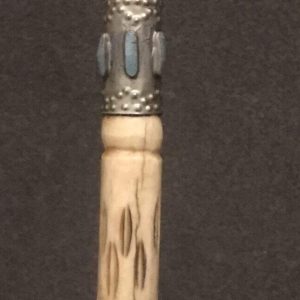
The rest of the day proved just as remarkable. Among my other finds were a Middle Eastern camel bone walking cane, a hand-painted Chinese calligraphy porcelain charger, and a solid silver and malachite pill box, alongside numerous smaller pieces. Kieron also uncovered some exceptional items, including a beautiful early Chinese cloisonné vase for just £5 and a Bristol blue Isle of Wight glass decanter for a little over £20. all my discoveries of the day and every day can be found on my website shop, here is the link. https://antiquesarena.com/shop/
It was a day full of surprises, shocks, and genuine excitement — the kind that reminds you why you got into antiques in the first place.
This Ottoman ewer is a perfect example of an enduring truth: the best objects are not always hidden. Sometimes, they are sitting right in front of us — waiting for the right person to recognise not just what they are, but what they survived.
🎥 You can watch the full day unfold on my YouTube channel here:
https://youtu.be/qX03KxFbvjU
🛒 You can view this exceptional piece in my shop here:
https://antiquesarena.com/product/monumental-ottoman-copper-brass-ceremonial-ewer-ibrik-anatolia-late-19th-century/
How to Spot Genuine Ottoman Metalwork
For collectors and buyers, distinguishing authentic Ottoman metalwork from later decorative or tourist pieces can be challenging. Here are some key indicators to look for:
- Hand-Raised Construction
Genuine Ottoman metalware was shaped by hand from flat sheets of copper or brass. Look for subtle hammer marks on the interior and evidence of traditional forming rather than perfectly uniform machine pressing. - Multiple Joined Sections
Large authentic pieces were often made in several sections and joined together. Visible horizontal and vertical soldered seams, especially on the body and neck, are a positive sign — not a flaw. - Aligned Decoration Across Seams
On higher-quality examples, repoussé or chased decoration continues cleanly across joins. Poor alignment or broken patterns often indicate later or lower-quality production. - Depth of Repoussé Work
Ottoman repoussé decoration is typically deep and sculptural, with raised forms that have real dimensionality. Flat, scratchy, or lightly engraved patterns are common on later decorative pieces. - Traditional Soldering and Brazing
Look for evidence of brass or spelter solder rather than modern welding. Older joins often show slight irregularity and age-consistent oxidation. - Natural, Untouched Patina
Original surfaces develop a rich, uneven patina over decades. Brightly polished or artificially darkened finishes can be a sign of modern intervention. - Functional Forms and Proportions
Authentic Ottoman vessels follow recognised forms: baluster necks, domed lids with finials, long gooseneck or bird-head spouts, and balanced handles designed for weight and function. - Weight and Material Quality
Genuine pieces usually feel substantial for their size. Thin, lightweight metal often indicates later decorative production rather than traditional workshop craftsmanship. - Avoid Lamp Conversions
Many original vessels were drilled and converted into lamps during the 20th century. While visually appealing, such alterations permanently reduce historical and collector value. - Context Matters
Scale, construction, and condition should be considered together. Monumental pieces that survive unconverted are significantly rarer than smaller or altered examples.
Caring for Antique Ottoman Copper & Brass Metalwork
Antique Ottoman metalwork should be cared for with restraint. Improper cleaning or restoration can permanently damage both the surface and the value of a historic piece. The following guidelines will help preserve authenticity and patina.
- Never Polish or Brighten the Surface
The darkened surface and natural oxidation are not dirt — they are patina, formed over decades or centuries. Polishing or using metal cleaners will permanently remove this historical surface and significantly reduce collector value. - Avoid Chemical Cleaners
Do not use commercial metal polishes, acids, vinegar, lemon juice, or abrasive pastes. These products strip original surfaces and can damage soldered joints and repoussé decoration. - Dry Dusting Only
Routine care should consist of gentle dry dusting using a soft, natural-bristle brush or a clean microfiber cloth. This removes surface dust without disturbing the patina. - No Water or Moisture
Avoid washing or rinsing antique metalwork. Moisture can accelerate corrosion, particularly in seams and recessed areas where verdigris naturally forms. - Leave Verdigris Intact
Traces of green oxidation (verdigris) in recesses are normal and expected on antique copper. These should not be scraped or removed unless advised by a professional conservator. - Handle With Care
Lift large pieces from the body rather than the spout, handle, or lid. These elements were not designed to bear the full weight of the vessel over time. - Stable Environment
Display in a dry, stable environment away from direct heat sources, radiators, fireplaces, or prolonged direct sunlight, all of which can stress metal and joints. - Avoid Oils and Waxes
Household oils and waxes can darken unevenly and trap dust. If protective treatment is ever required, consult a professional conservator experienced in historic metalwork. - Do Not Repair Without Expertise
Loose joints or movement should be assessed by a qualified metal conservator. Amateur repairs can cause irreversible damage. - When in Doubt, Do Nothing
In antique metalwork, inaction is often the best preservation. Original surfaces tell the story of the object’s survival.
Collecting & Investing in Ottoman Metalwork: Understanding Value
Antique Ottoman metalwork occupies a specialized niche in the antiques market. Unlike mass-produced decorative pieces, authentic examples with age, quality, and original condition can hold and grow in value over time. The market for these objects is defined by craftsmanship, rarity, condition, provenance, and historical integrity rather than trend or décor appeal alone.
Here’s how values generally break down for collectors and investors:
🔹 1. Decorative / Décor Market
Typical Range: £150 – £1,500
This category includes:
- Pieces altered into lamps
- Light, thin metalwork
- Later production or export items (1920s–1970s)
- Mass-produced reproductions
Why: These items appeal to interior decorators and casual buyers, not historical collectors. Conversion and polishing remove key elements of authenticity, which keeps prices low.
🔹 2. Non-Specialist Auction Market
Typical Range: £800 – £2,000
Items here are:
- Sold through general auctions
- Often miscatalogued
- Lacking specialist metalwork attribution
Why: Without specialist knowledge, many auction houses undervalue or mislabel these objects. Collector confidence is lower, and estimates reflect that.
🔹 3. Collector’s Market — Specialist Auctions & Dealers
Typical Range: £1,800 – £3,500
This tier includes:
- Untouched examples
- Larger than average scale
- Good craftsmanship
- Known form and technique
Why: Serious buyers recognise original condition and technique. This market includes well-informed antiques buyers, institutional collectors, and dealers focused on Islamic or Ottoman metalwork.
🔹 4. Top Tier / Investment Grade
Typical Range: £3,500 – £6,000+
Objects in this range have most of the following:
✔ Monumental scale (30″+ / 75 cm+)
✔ Multiple hand-formed sections with aligned decoration
✔ Strong sculptural quality
✔ Unconverted original patina
✔ Documentation, provenance, or specialist attribution
Why: These pieces are rare, both because they were originally expensive to make and because many have been altered over time. The unconverted monumental examples — especially those with complex construction and rich repoussé — are the ones that retain and grow value.
What Drives Value Long-Term
📌 1. Condition — Original Patina is Everything
Collectors pay for age, not polish. Once the original surface is lost, so is a significant portion of value.
📌 2. Scale — Size Changes Everything
Large objects (30″ and up) were never everyday items and were made only for significant interiors. They are inherently rarer than smaller vessels.
📌 3. Technical Quality — Craftsmanship Speaks
Pieces that clearly show hand-raising, aligned decoration across seams, and excellent proportion are priced higher because:
- They represent skilled labour
- They are harder to fake
- They satisfy connoisseur taste
📌 4. Provenance & Attribution
An identified region (e.g., Ottoman Anatolia) and secure date range (late 19th century) help. If a piece has documented provenance (old collection, photo, archive, etc.), prices can increase significantly.
📌 5. Market Venue Matters
The same object could sell for:
- £800 at a local auction
- £2,500 at a specialist Islamic art sale
- £5,500+ through a dealer to a collector
Selling smartly is part of investing.
Quick Reference: Value Bands for Ottoman Metalwork
| Category | Typical Price Range | Who Buys This |
| Décor / Converted | £150 – £1,500 | Home decorators |
| General Auction | £800 – £2,000 | Casual bidders |
| Specialist Market | £1,800 – £3,500 | Collectors/Dealers |
| Top Tier / Investment | £3,500 – £6,000+ | Serious collectors & investors |
Where My Ewer Sits
My piece ticks almost all the premium boxes:
✔ Monumental size (~32″)
✔ Original surface & patina
✔ Hand-raised construction with aligned repoussé
✔ Unaltered (no lamp conversion)
✔ Rare survival at this scale
Realistic price expectation for collectors:
👉 £2,500 – £4,500+ (retail/collector sale)
👉 £1,800 – £3,000 (specialist auction estimate)
Insurance replacement value:
👉 £5,000 – £6,500+
Final Thoughts for Collectors
If you’re investing in Ottoman metalwork:
✔ Prioritise condition and originality
✔ Understand the difference between décor and metalwork markets
✔ Let scale and craftsmanship guide price expectations
✔ Use specialist auction houses or dealers when possible for highest value
This isn’t just decoration — it’s history you can hold.
Why Monumental Ottoman Ewers Were Made
In the late Ottoman period, scale was deliberate. Objects of this size were not intended for everyday domestic use, even within affluent households. Monumental ewers were produced as ceremonial and architectural objects, designed to convey status, hospitality, and cultural refinement.
Ottoman society placed great importance on presentation, particularly in formal reception spaces. Large metalwork vessels functioned as symbols of wealth and taste, often displayed prominently rather than stored away. Their size, weight, and visual impact were meant to impress guests and reinforce the standing of the household or institution they belonged to.
The labour and cost involved in producing such pieces were considerable. Multiple hand-formed sections, deep repoussé decoration, and careful assembly meant that only skilled workshops could undertake commissions of this scale. As a result, large intact examples survive in far smaller numbers than standard household vessels.
Why So Many Ottoman Ewers Were Converted Into Lamps
During the 20th century, particularly between the 1920s and 1970s, large Ottoman metal vessels entered European and American markets in significant numbers. Western buyers admired their exotic appearance but often had no practical use for them as vessels.
To meet decorative demand, many dealers drilled and converted ewers into lamps, transforming historic objects into interior furnishings. While visually striking, this process permanently altered the vessels, destroying their integrity as historic metalwork.
Today, most large Ottoman ewers encountered on the market have been lamped, polished, or otherwise altered. Intact examples that escaped this fate are increasingly scarce. For collectors and historians, unconverted vessels retain far greater significance, as they preserve original construction, surface patina, and cultural context.
This distinction explains why prices vary so widely between decorative lamp conversions and untouched ceremonial examples.
How I Assess and Authenticate Ottoman Metalwork
When evaluating Ottoman metalwork, I look beyond surface decoration and focus on construction, materials, and evidence of traditional workmanship. Key factors include:
- Construction method: Hand-raised pieces show subtle hammer marks and are often assembled from multiple sections rather than being spun or pressed.
- Visible seams: Horizontal and vertical soldered joins are expected on large authentic pieces and indicate traditional workshop techniques.
- Decoration quality: Genuine repoussé work is deep and sculptural, not lightly engraved or stamped.
- Alignment across joins: High-quality pieces maintain consistent decoration across seams, demonstrating planning and skill.
- Patina: Natural oxidation and surface wear should appear uneven and settled, not bright or artificially aged.
- Alterations: Drilling, wiring, polishing, or modern repairs significantly affect authenticity and value.
No single feature proves authenticity on its own. It is the combination of scale, construction, surface, and condition that determines whether a piece belongs to the decorative market or the serious collector’s category.
Common Misidentifications in Ottoman Metalwork
Large copper and brass vessels are frequently misidentified. Some of the most common errors include:
- Calling all Islamic metalwork “Moorish”
This term is often misused commercially and does not accurately describe Ottoman production. - Assuming lamped pieces were made as lamps
Most were originally vessels and later converted. - Confusing decorative export ware with antique metalwork
Thin, lightweight, machine-made pieces are often mistaken for older examples. - Over-dating objects
Not all dark or heavy metalwork is medieval; careful construction analysis is essential. - Equating polish with quality
Bright surfaces often indicate loss of original patina rather than superior condition.
Understanding these distinctions helps collectors avoid common pitfalls and make informed decisions.
Frequently Asked Questions: Ottoman Metalwork
What is Ottoman metalwork?
Ottoman metalwork refers to copper, brass, bronze, and silver objects produced within the Ottoman Empire, which lasted until 1922. These objects include ewers, trays, lamps, bowls, incense burners, and architectural fittings, and were made using traditional hand-forming, repoussé, chasing, and soldering techniques.
How old is most Ottoman metalwork found today?
The majority of Ottoman metalwork on the market dates from the 18th to early 20th centuries, with a large volume produced during the 19th century, when craftsmanship and decorative complexity reached a peak.
How can I tell genuine Ottoman metalwork from later decorative pieces?
Authentic Ottoman metalwork typically shows:
- Hand-raised construction
- Visible soldered seams on larger objects
- Deep repoussé or chased decoration
- Natural, uneven patina
- Substantial weight for its size
Later decorative or tourist pieces are often thinner, machine-pressed, lightly engraved, or overly polished.
Why do so many Ottoman metal objects appear as lamps today?
During the 20th century, many original Ottoman vessels were converted into lamps for the Western décor market. This was not their original function. While visually appealing, these conversions permanently alter the object and reduce its historical and collector value.
Does polishing Ottoman metalwork increase its value?
No. Polishing removes original patina, which is one of the most important indicators of age and authenticity. Once removed, patina cannot be restored, and value is typically reduced.
What is patina and why does it matter?
Patina is the natural surface change that occurs over time due to oxidation and handling. On Ottoman metalwork, patina provides visual depth and historical evidence. Collectors value untouched patina as proof of originality.
Are Ottoman metal objects signed or marked?
Most Ottoman metalwork is unsigned. While some pieces carry stamps, workshop marks, or inscriptions, the absence of a mark is normal and does not indicate a later or inferior object.
Is Ottoman metalwork functional or decorative?
Both. Smaller pieces were often functional household items, while larger or more elaborate objects were made for ceremonial, architectural, or display purposes, particularly in elite settings.
Why does size matter in Ottoman metalwork?
Larger pieces required more material, labour, and skill to produce and were not made in large quantities. As a result, monumental examples are inherently rarer and often more desirable to collectors.
What materials were commonly used?
Copper was the most common base metal, often paired with brass fittings. Silver and tombak (gilded copper) were used for higher-status objects.
Is Ottoman metalwork a good area to collect?
For collectors interested in craftsmanship and history, Ottoman metalwork offers strong long-term appeal. Original condition, quality of workmanship, and rarity are the most important factors affecting desirability.
How should Ottoman metalwork be cared for?
Only gentle dry dusting should be used. Avoid polishing, water, or chemical cleaners. Stable, dry environments are best for long-term preservation.
Why do prices vary so widely for similar-looking pieces?
Differences in age, construction quality, condition, size, and later alterations (such as lamp conversion) can dramatically affect value. Objects that appear similar at first glance may belong to entirely different market categories.
Can Ottoman metalwork still be found at reasonable prices?
Yes, but genuine examples are increasingly scarce, especially intact pieces of larger scale. Knowledge and careful inspection are key to identifying overlooked objects.
Final Thoughts: Why Discoveries Like This Still Matter
Discoveries like this Ottoman ewer are a reminder of why antiques remain so compelling. They are not simply objects; they are survivors. This piece lived through the final decades of the Ottoman Empire, passed quietly through the 20th century, and somehow escaped the alterations that claimed so many of its peers. It arrived in the present day still telling its story through its construction, surface, and form.
The Ottoman Empire, which lasted until 1922, produced a vast and sophisticated material culture. Its metalwork tradition balanced function, symbolism, and architectural presence with remarkable consistency. Even without inscriptions or documented provenance, objects like this speak clearly through their workmanship. The hand-raised sections, aligned repoussé decoration, and honest patina are not decorative choices — they are historical evidence.
For those interested in Ottoman metalwork, the appeal lies not only in visual impact, but in understanding how and why these objects were made. Monumental vessels were expressions of status, hospitality, and craftsmanship at a time when scale and labour still carried meaning. That such pieces can still be found — occasionally overlooked, misunderstood, and waiting to be recognised — is what keeps the hunt alive.
Whether you are a seasoned collector, a student of history, or simply curious about the Ottoman world, objects like this offer a tangible connection to a civilisation that shaped centuries of art, trade, and culture. They remind us that the past is not always hidden in museums or archives; sometimes, it is sitting quietly on a table, waiting for someone to stop and look closely.
For me, this ewer represents more than a fortunate find. It represents the value of knowledge, patience, and respect for craftsmanship — and it reinforces why preserving these objects, rather than altering them, matters.
If this piece encourages even one person to look more carefully at Ottoman metalwork, or to question what they are seeing rather than passing it by, then it has already done its job.
My links. 🔗 Useful Links
https://www.youtube.com/@AntiquesArena
📚 All My Books for Resellers: https://antiquesarena.com/books/
🌍 Visit My Website: https://www.antiquesarena.com
🔗 All My Links: https://linktr.ee/antiquesarena
💬 Facebook: https://www.facebook.com/AntiquesArena/
🐦 X (Twitter): https://twitter.com/antiquesarena
Patreon https://www.patreon.com/AntiquesArena
WEBSITE
If you’re looking for reliable website hosting, I highly recommend WPX.
I’ve used them for years and they are second to none:
- Multiple plans that grow with your needs
- Fast, knowledgeable 24/7 tech support at no extra cost
- Ability to host your own emails
If you’d like to support this channel at no cost to you, please consider signing up through my referral link – we receive a small commission, which helps keep the content coming:
https://wpx.net/?affid=9610
☕ Donate a Coffee: https://paypal.me/AntiquesArena